

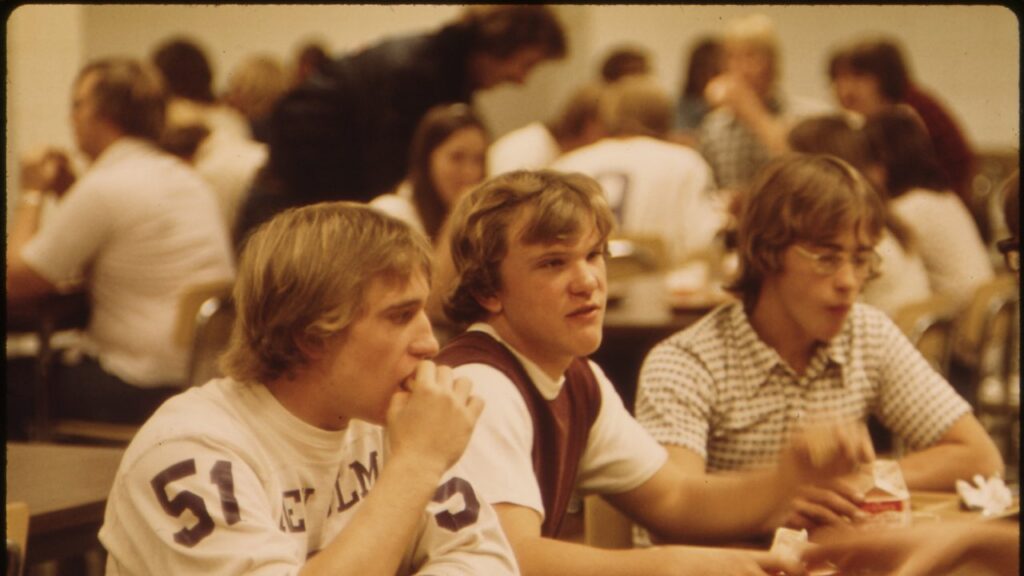

School lunch is a shared memory of trays, milk cartons, familiar tables, and a brief pause between lessons. These photographs move through the postwar decades, when lunches carried from home existed alongside a growing federal meal program.
Drawn from public collections, the images preserve everyday scenes that rarely entered family albums. They also show the cooks, cafeteria workers, and public programs behind a routine part of the school day.
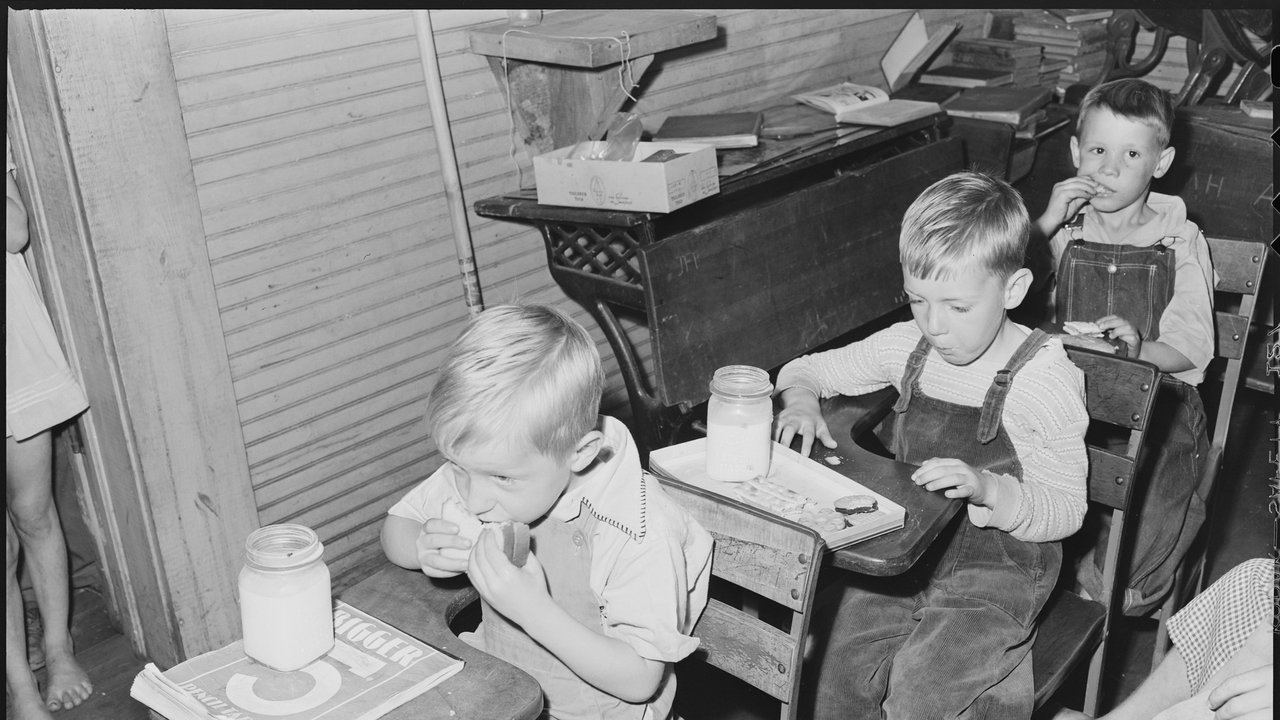

1946: Lunch at School Desks in Four Mile
Children of coal miners eat lunch at their school desks in Four Mile, Kentucky. The archive caption notes that a mother brought lunch for the children in the first two seats. The photograph was made on September 4, 1946, the same year that federal legislation established the National School Lunch Program.
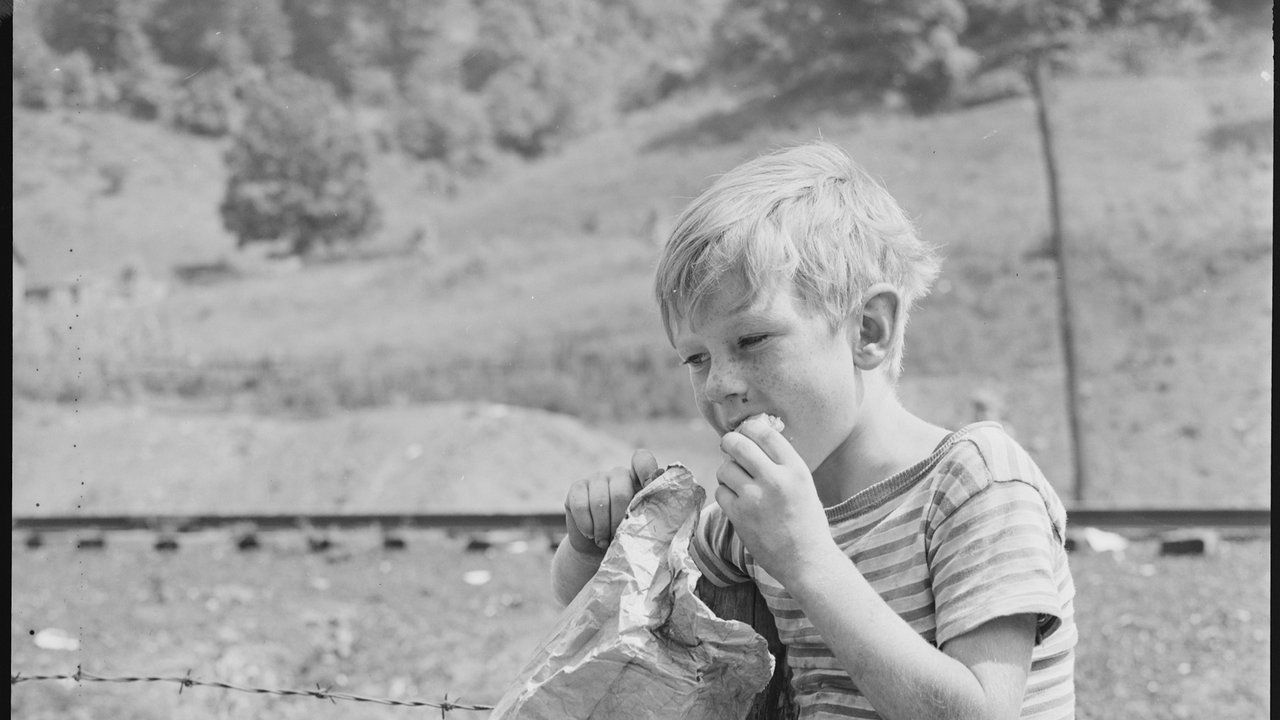

1946: A Paper-Bag Lunch Outside
Another Four Mile photograph shows a miner’s child eating on the schoolhouse grounds. His paper bag and outdoor seat offer a quiet glimpse of lunch carried from home. The 1946 federal law required meals served through participating school-lunch programs to meet minimum nutritional requirements prescribed by the secretary of agriculture.
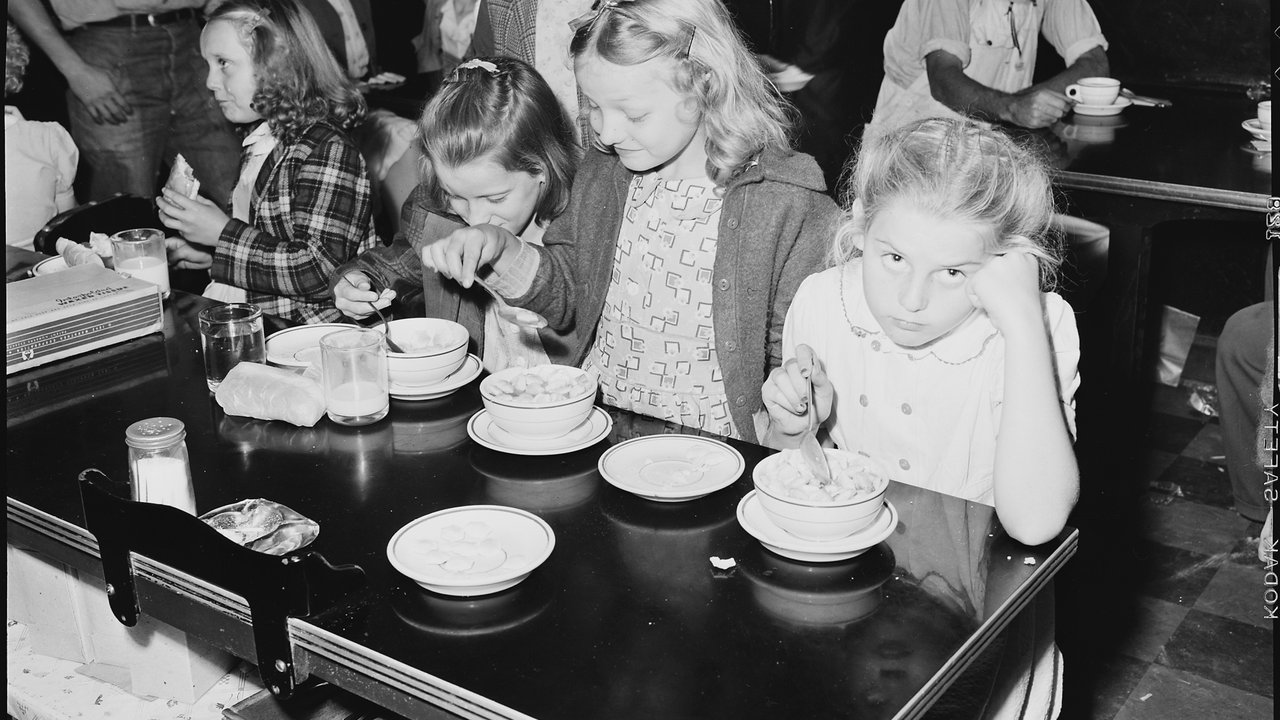

1946: Lunchtime in Wheelwright
Girls eat at a restaurant counter in Wheelwright, a Kentucky coal company town. The archival caption says the restaurant was largely patronized by schoolchildren at lunchtime. Federal regulations issued that year defined the Type A lunch as a complete hot or cold meal providing one-third to one-half of a child’s daily nutritional requirements.
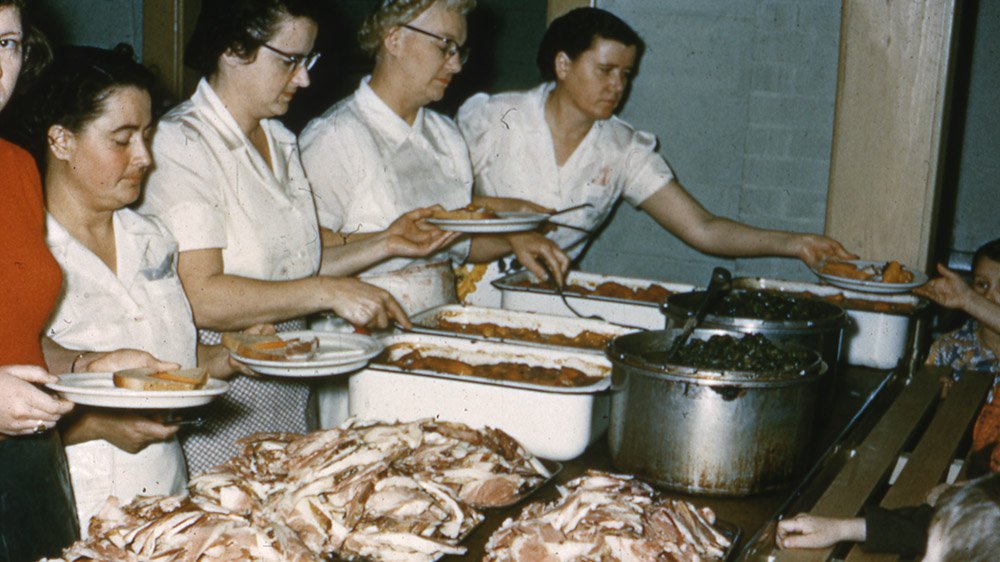

About 1950: Inside Duplin County Schools
A State Archives of North Carolina filmstrip preserves color scenes from Duplin County schools around 1949 through the 1950s. Its frames cover classrooms, school buildings, buses, students, teachers, and other parts of daily school life. The collection’s most recent photographs and statistics appear to date from 1953.
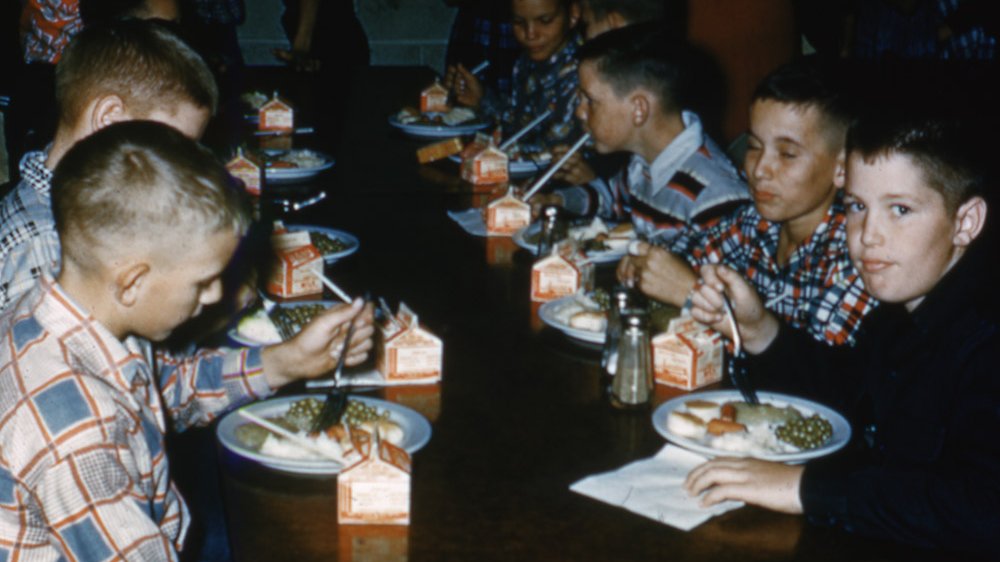

About 1950: The Type A Lunch Standard
Lunchroom photographs from this period belong to a changing national story. Federal regulations defined the Type A lunch as a complete meal designed to provide a substantial portion of a child’s daily nutritional requirements. That standard helps explain why the emerging federal program focused on a full meal rather than a single snack or beverage.
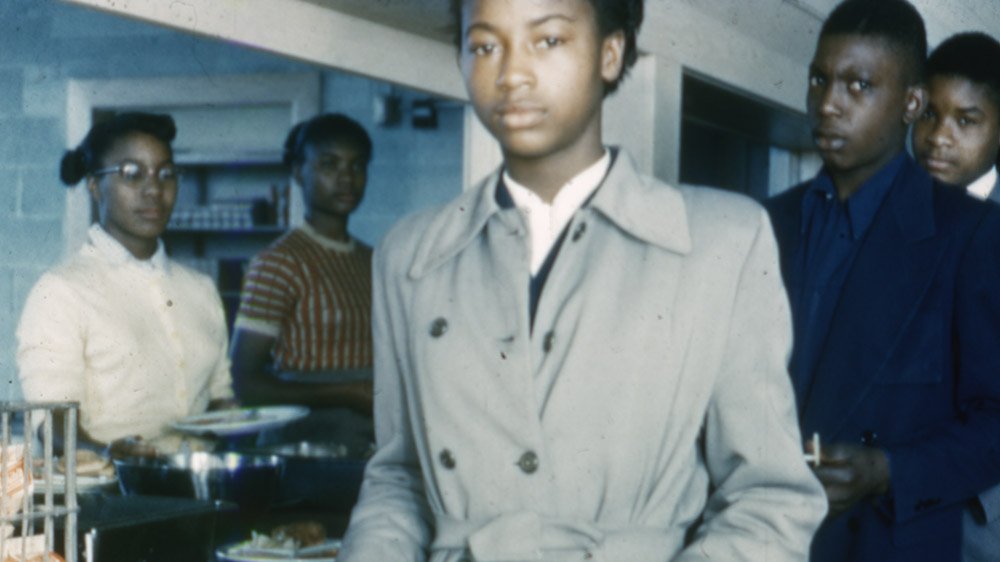

About 1950: School Lunch During Segregation
The Duplin County collection also comes from an era when many American children attended racially segregated schools. The Library of Congress notes that most segregated schools were not integrated until many years after school segregation was outlawed. Lunchrooms, like classrooms, reflected the unequal school systems in which they operated.
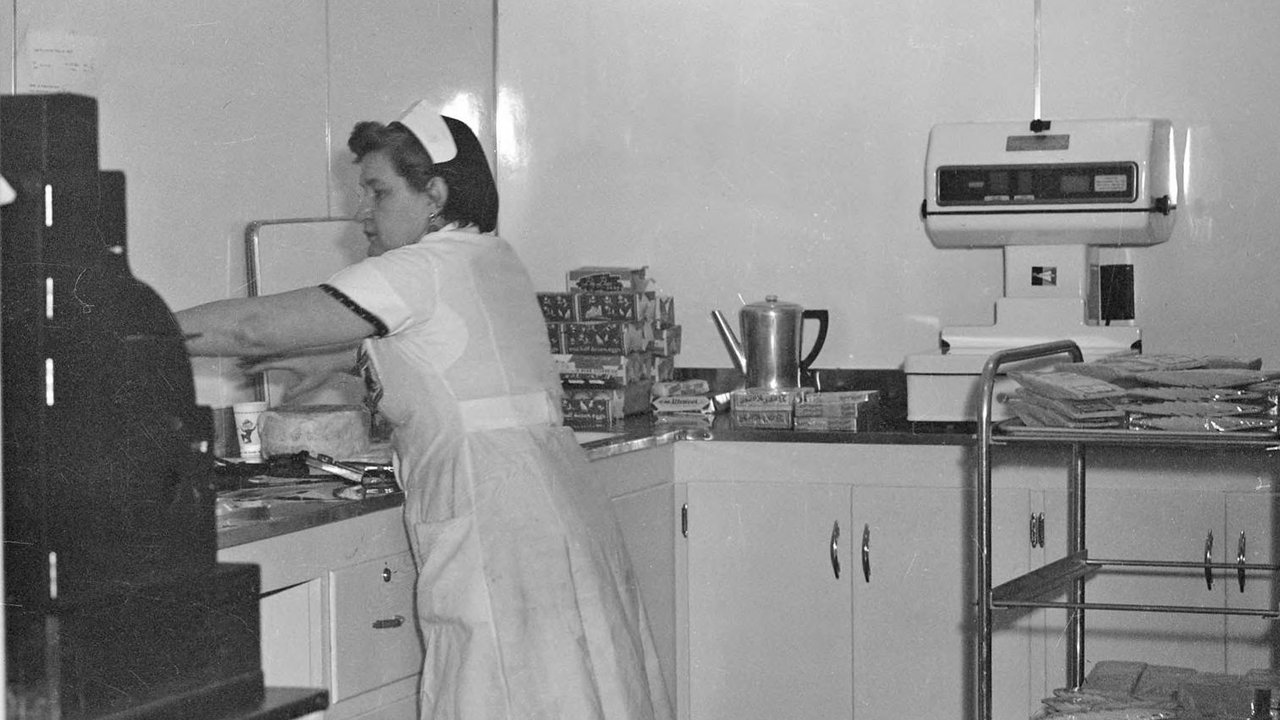

About 1955: Working the Worthington High Counter
A cafeteria worker stands at Worthington High School in Ohio in a photograph taken by student A. V. Shirk around 1955. The scene turns attention toward the people who kept lunchrooms moving. By then, federal support for school food had expanded with the Special Milk Program, inaugurated in 1954.
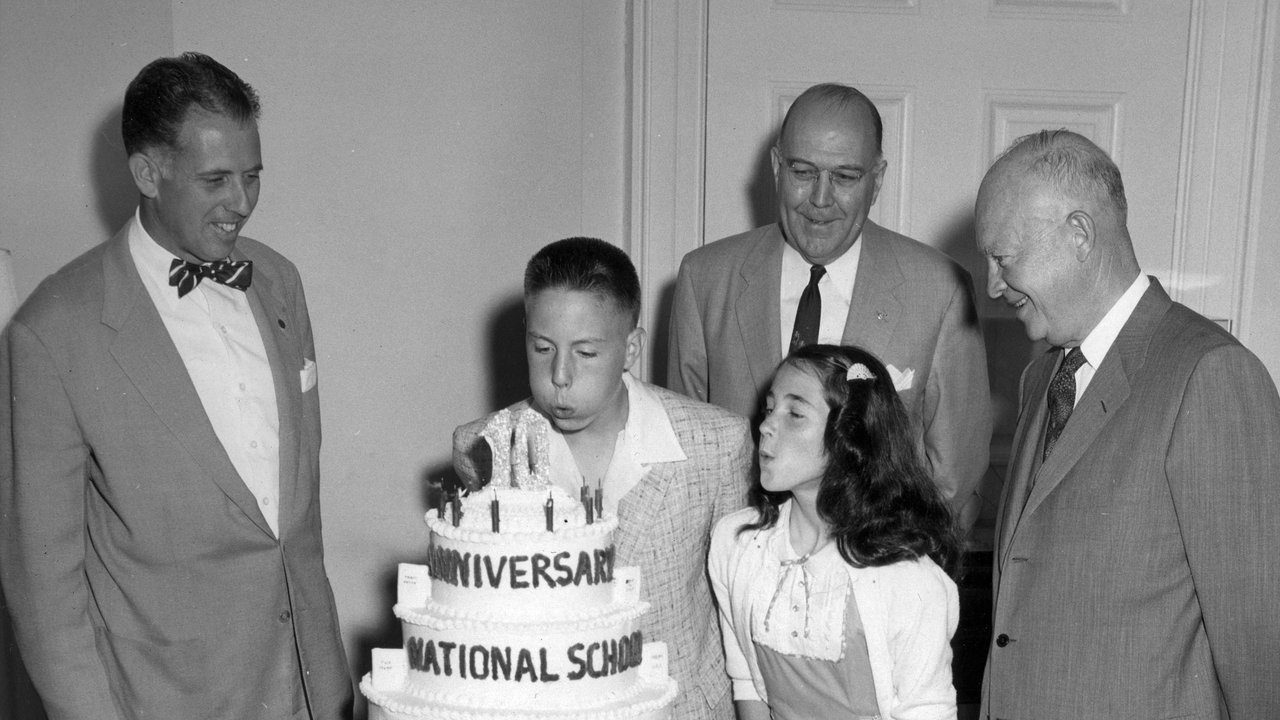

1956: An Anniversary Cake for President Eisenhower
The USDA archive identifies this photograph as President Eisenhower receiving a cake for the National School Lunch Program’s tenth anniversary. The National Agricultural Library likewise identifies 1956 as the program’s tenth-anniversary year, marking a decade since the National School Lunch Act established the permanent federal program.
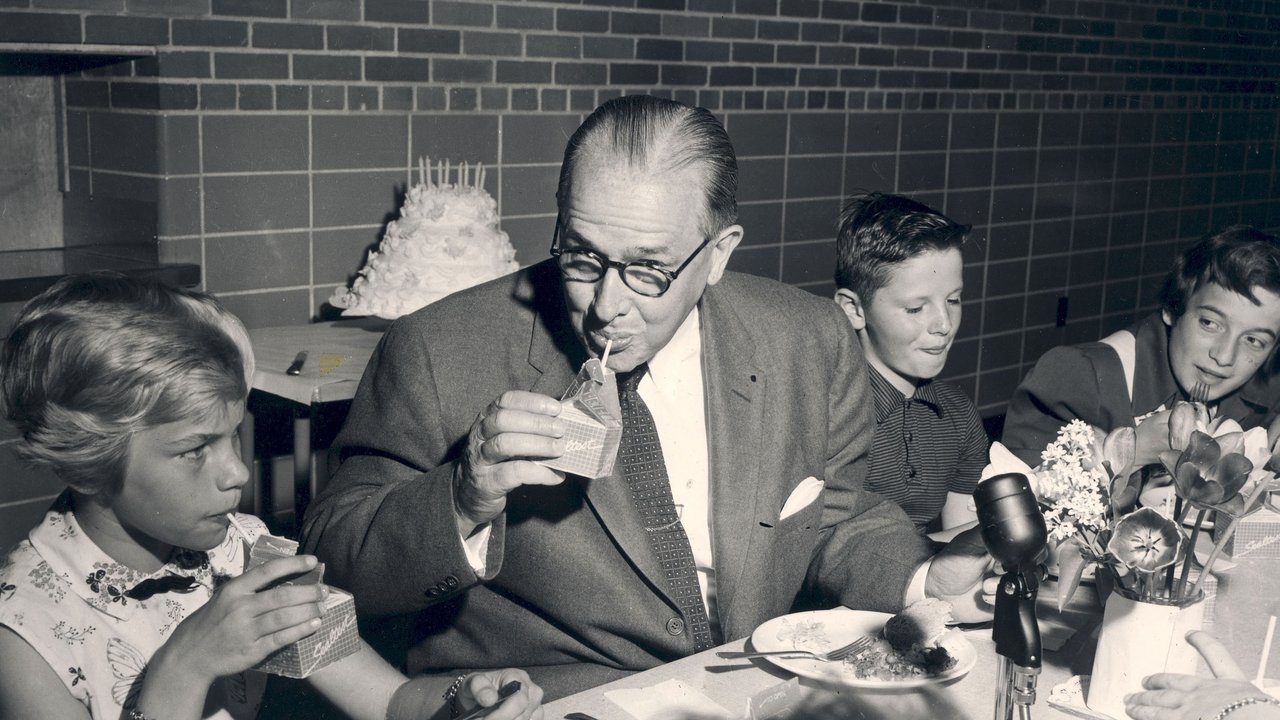

1956: Secretary Benson Drinks Milk
Agriculture Secretary Ezra Taft Benson drinks milk at a school lunch table in October 1956. Benson served as secretary of agriculture from 1953 to 1961. The Special Milk Program had been inaugurated two years before this photograph, adding another federal initiative to the expanding system of child nutrition programs.
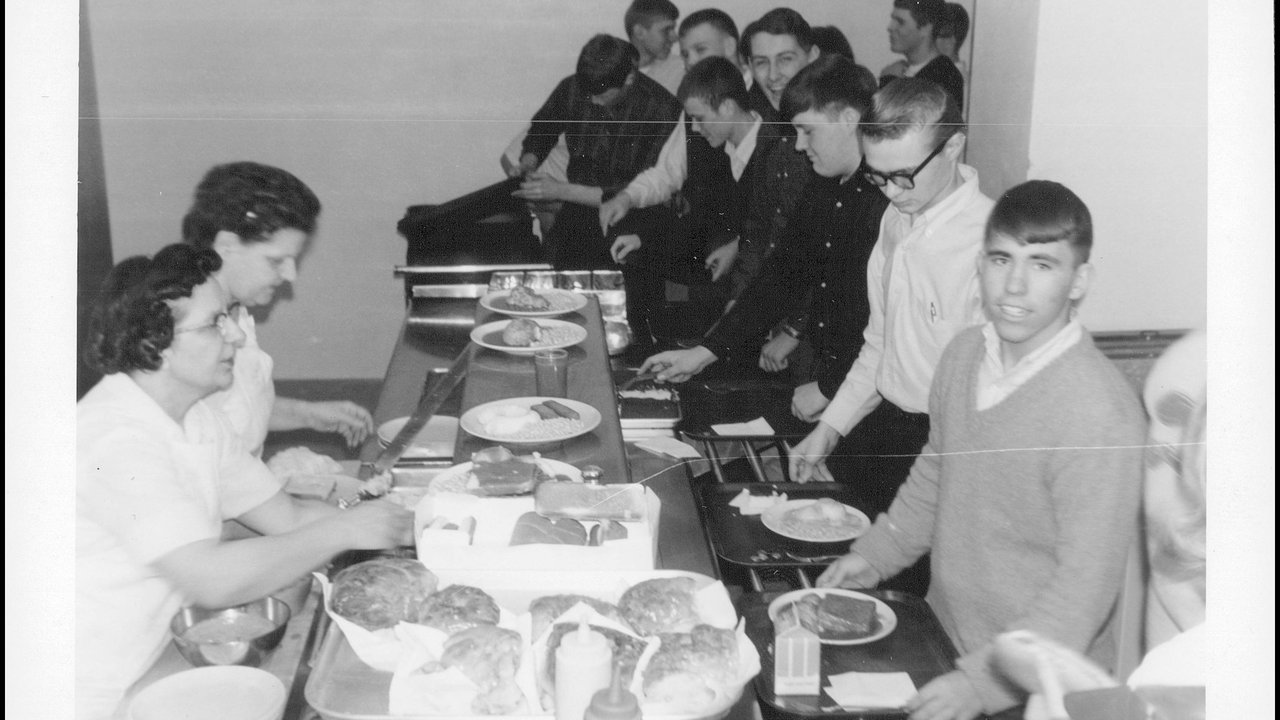

1963: Minneapolis Lunch Service at Scale
A Minneapolis school-lunch photograph belonged to a series used in the district’s 1963 annual report, although the print was stamped February 1964. The district reported preparing and serving six million cartons of milk and more than 1.5 million plate lunches annually, numbers that reveal the enormous daily operation behind the familiar cafeteria meal.
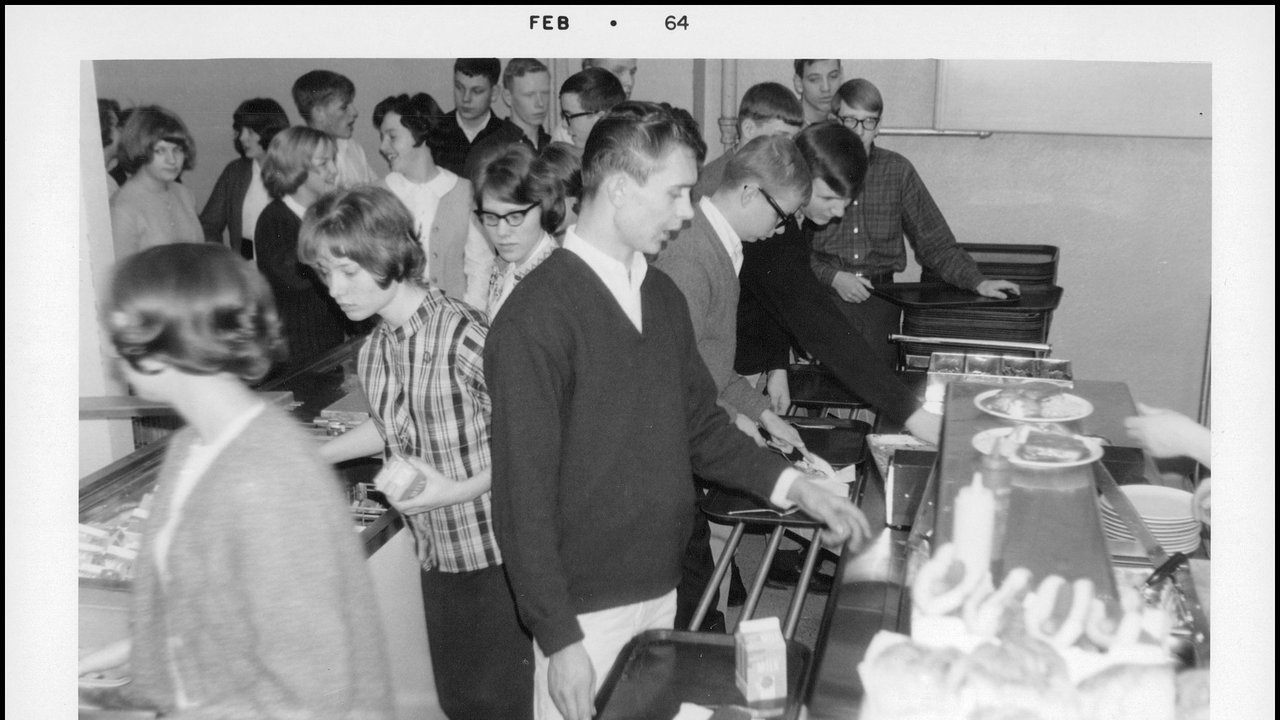

1963: Moving Through the Lunch Line
Another photograph from the same Minneapolis series shows teenagers sliding their trays along the counter, milk cartons already in hand. The lunch line organized a large group into a steady progression from the serving counter to the dining area. For generations of students, that short trip with a tray became one of the school day’s most recognizable routines.
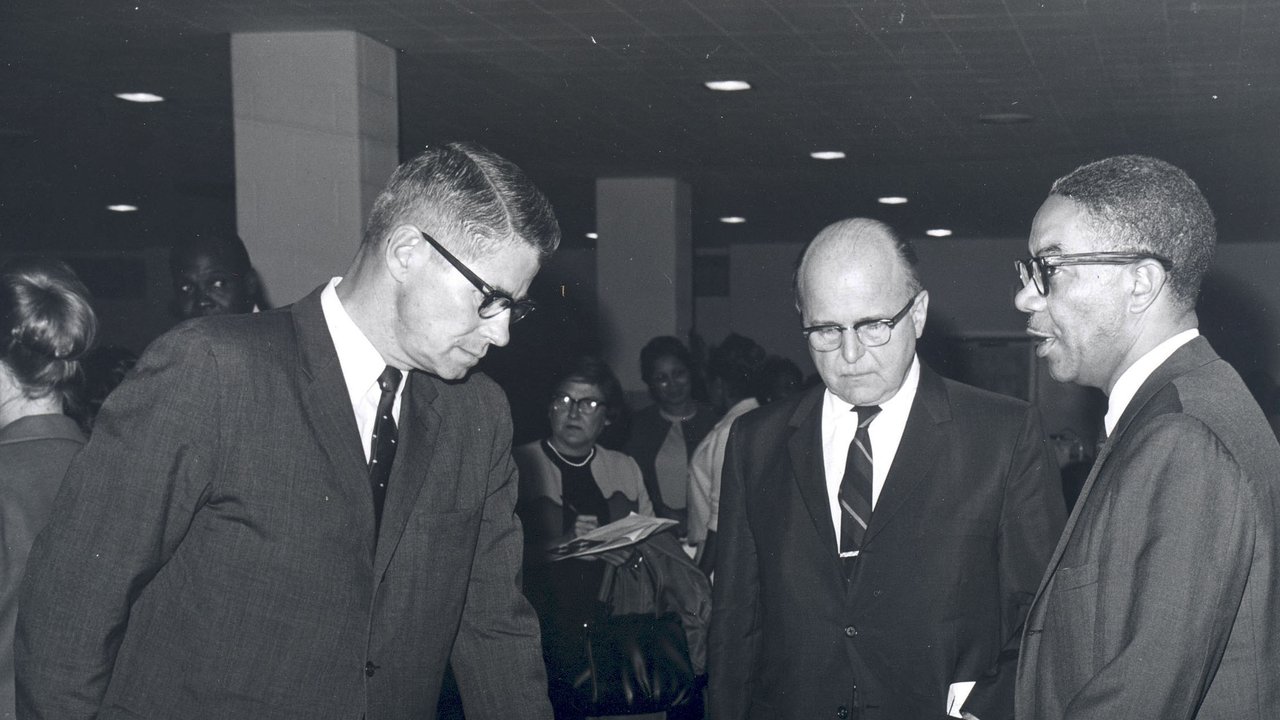

1966: Officials Visit Hine Junior High
Agriculture Secretary Orville L. Freeman appears at Hine Junior High School in Washington, D.C., during 1966. The visit occurred in the National School Lunch Program’s twentieth-anniversary year. Freeman served as agriculture secretary from 1961 to 1969, placing him at the center of federal food policy during this period.
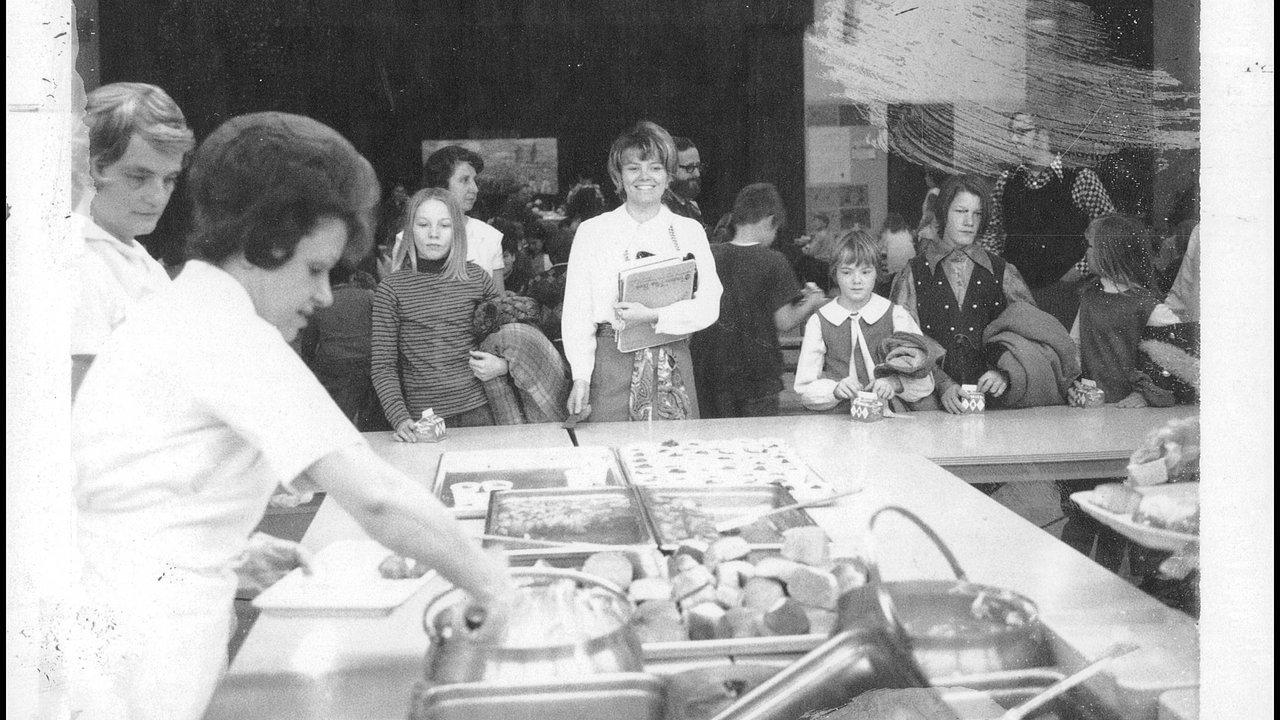

1971: A Minnesota Grown Lunch
A cafeteria worker serves students during a Minnesota Grown kickoff lunch in 1971. The recorded menu included Swedish meatballs, mashed potatoes, molded fruit salad, wheat rolls, apple cranberry crisp, and milk. Unlike a formal anniversary photograph, this scene centers on a complete meal moving across the counter during an ordinary lunch period.
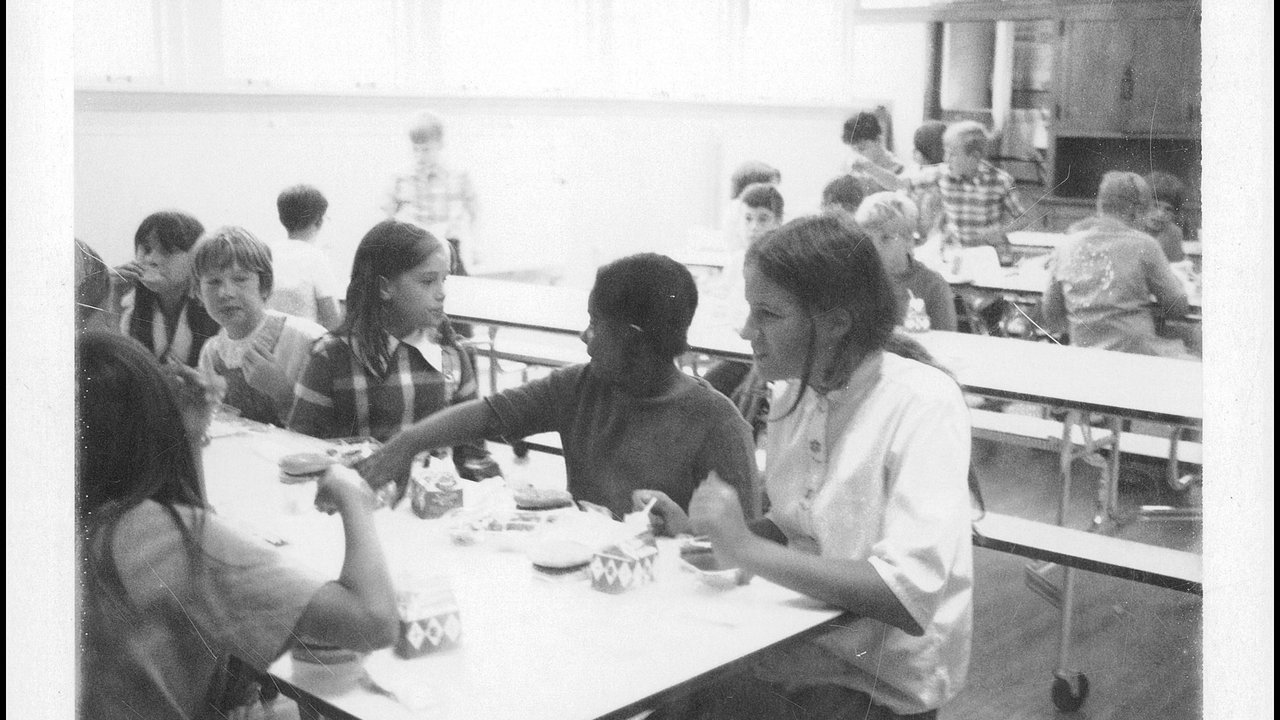

1971: Students Gather in the Cafeteria
Students sit together for lunch in a Minneapolis cafeteria in this 1971 photograph. The foldout tables and close seating give the room a communal feeling familiar across generations. Five years earlier, the School Breakfast Program had begun as a pilot project; Congress would make that program permanent in 1975.
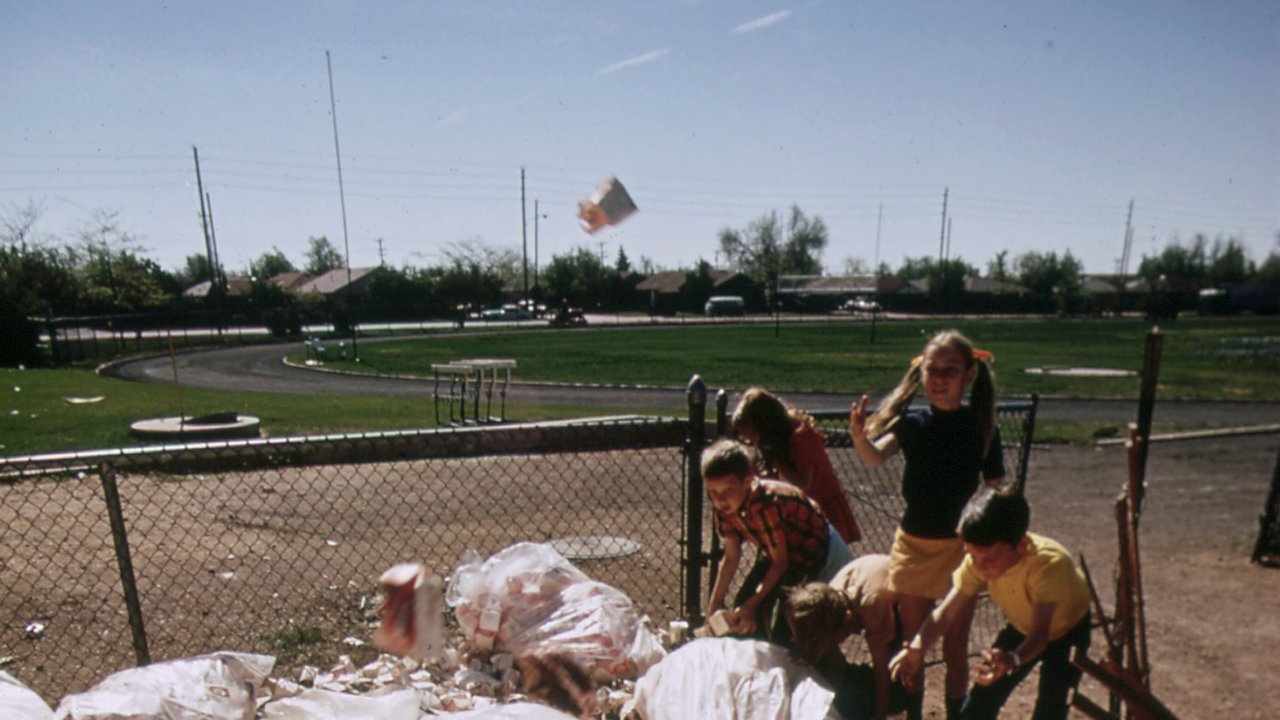

1972: Denver Collects Used Milk Cartons
Students at Peoria Elementary School stand with packages of used milk cartons in Denver in May 1972. According to the archival title, Denver schools were returning their cartons to the Ex-Cell-O Corporation for reprocessing. The photograph connects the familiar school-lunch carton with the decade’s growing attention to waste and environmental responsibility.
Across these decades, school lunch changed through legislation, expanding programs, cafeteria labor, and new environmental concerns, yet it remained a deeply personal part of the day. Which school lunch, cafeteria scene, or milk carton do you remember most clearly?
Follow Lilyon on MSN for more stories like this.
Sources: