

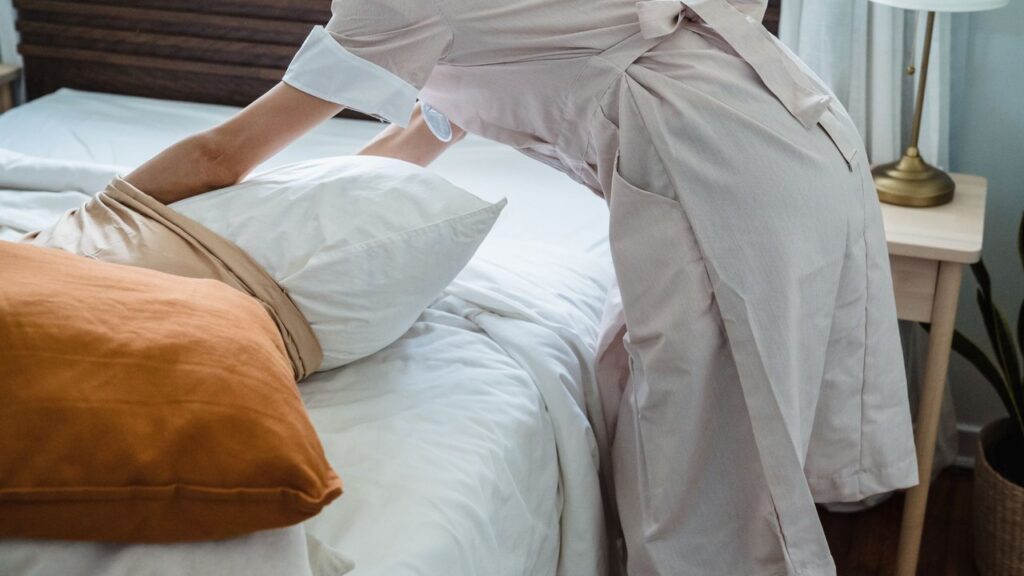
How often should you wash your sheets, towels, pillowcases, and pillows?
A simple routine works for most homes: wash sheets and pillowcases weekly, bath towels after 3 to 5 normal uses, hand and dish towels every 2 days, and ordinary bed pillows once or twice a year. Care labels, allergies, and illness may call for adjustments.
Here is how to build a schedule you can maintain, choose the right washer settings, and protect towels and pillows from avoidable damage.
How Often Should You Wash Household Linens?
Trusted recommendations give you some room to set a practical routine. Utah State University Extension recommends washing sheets and pillowcases weekly. The American Cleaning Institute says sheets should be washed at least every two weeks and more often if you sweat heavily at night.
- Sheets and pillowcases. Wash them weekly for a clear, easy-to-remember routine. If they are not heavily soiled and you do not sweat heavily at night, washing every two weeks still follows ACI guidance.
- Bath towels. Wash them after 3 to 5 normal uses. Hang each towel after use and let it dry before using it again.
- Hand and dish towels. Change and wash them every 2 days, as recommended by Utah State University Extension.
- Bath mats. Add washable bath mats to your weekly laundry routine, following the Extension service’s recommendation.
- Bed pillows. Wash ordinary bed pillows once or twice a year, according to the Extension service. Follow a different schedule when the care label or allergy needs call for one.
Keep clean replacements where you use them. A spare towel near the kitchen and an extra sheet set in the bedroom make it easier to stay on schedule.
Which Washer Settings Should You Use?
Start with the sewn-in care label. It should decide the water temperature, wash cycle, and dryer heat. The American Cleaning Institute says the normal or cotton cycle is intended for regular cotton sheets and towels and commonly uses warm or hot water. If the label calls for cold water or gentler care, follow the label.
Measure detergent according to the package directions. More detergent is not better, and an overloaded washer cannot move laundry properly, so leave enough room for the load to circulate.
The CDC advises washing towels and linens with detergent at the recommended water temperature, then drying them completely. Never fold or store damp laundry. When the label requires low heat or air drying, use that method instead of automatically selecting high heat.
How Can You Keep Towels Fresh Between Washes?
Hang each bath towel promptly after use. ACI says it needs to dry before you use it again. If the towel stays damp, put it in the laundry instead of counting it as another normal use.
Give every bath towel its own hook or bar rather than piling several together. Keep a small basket for used hand and dish towels so their every-2-days rotation stays separate from the bath towels.
How Should You Wash Bed Pillows?
Pillow care depends on the product, filling, and construction. Confirm that your exact pillow is machine washable before soaking it. Inspect the shell and seams first because a damaged seam can release filling during the wash.
For a washable pillow, ACI recommends washing 2 pillows together on a gentle cycle. One bedding manufacturer’s general instructions for its standard pillows specify cold water and a gentle cycle, followed by low heat, air fluff, or no heat. The sewn-in label remains the final instruction.
- Dry the center completely. Do not put a pillow back on the bed while its center has damp areas or wet clumps. Continue drying only with the method and heat level allowed by the label.
- Treat foam cautiously. Do not assume a foam insert is washable. One major foam-pillow manufacturer says to wash a removable cover in cold water with mild detergent and air-dry it. Do not wash or submerge the insert unless its instructions specifically permit that.
- Skip improvised cleaning mixtures. Use the detergent and washing method allowed by the pillow label. Extra cleaners, unapproved bleach, and higher heat can conflict with the manufacturer’s directions.
What Should You Change for Allergies or Illness?
For dust-mite control, ACI recommends washing sheets on a regular cycle with warm or hot water. Washing removes dust-mite allergens and some mites. When the care label permits, a hot dryer can help kill mites. Outdoor drying may expose sheets to dust and pollen.
If you do not use dust-mite-proof covers, ACI recommends washing washable pillows at least 4 times a year. This allergy-focused schedule is more frequent than the general household recommendation.
- Handle sick-room laundry normally. The CDC says laundry from a sick person can be washed with other household laundry. Use detergent and the recommended temperature, dry everything completely, clean the hamper or basket, and wash your hands after handling dirty items.
- Do not force extra heat. Use the warmest setting the care label allows. A hotter cycle is not appropriate when the label requires cold water, low heat, or air drying.
Choose one regular laundry day, keep clean replacements handy, and let each care label handle the exceptions.
Sources:
- American Cleaning Institute: Do I need to wash this?
- Utah State University Extension: Ask an Expert – The Dirt on Laundry: How Often to Wash?
- American Cleaning Institute: Laundry Basics
- American Cleaning Institute: Allergies & Asthma
- CDC: When and How to Clean and Disinfect Your Home
- Pacific Coast: Laundry Care
- Tempur-Pedic: How can I keep my pillow clean?