

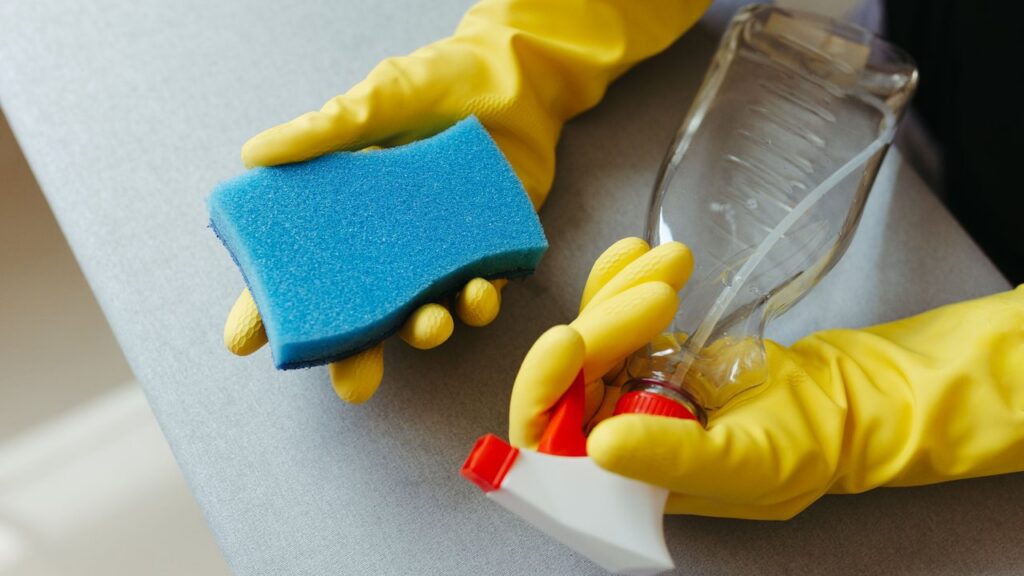
Combining two cleaning products will not necessarily tackle a stubborn mess faster. It can instead create toxic gases, corrosive chemicals, or a violent reaction.
Never mix household bleach or disinfectants with other cleaners. Applying one product while another is still wet can also bring the chemicals together.
Here are five combinations to avoid and the steps to take if products are accidentally mixed.
Bleach and Ammonia Release Chloramine Gas
Mixing chlorine bleach with ammonia creates chloramine gas, which can cause heavy coughing.
Keep bleach away from ammonia-based cleaners. Do not pour them into the same bucket, toilet, or sink, and never apply one to a surface that is still wet with the other.
- Choose one cleaner. Use the product that matches the job instead of trying to strengthen it with another chemical.
- Check the ingredients. If a label lists ammonia, keep that product separate from bleach.
- Leave if coughing starts. Move away from the cleaning area and get fresh air.
Never test a questionable combination, even on a small area.
Bleach and Acids Release Chlorine Gas
Mixing bleach with an acid releases chlorine gas. Vinegar and some toilet bowl cleaners are acidic, so pouring bleach into a toilet that already contains cleaner can create a dangerous exposure.
Chlorine can burn or irritate the eyes, nose, and throat and cause coughing.
- Keep vinegar away from bleach. Do not combine them in a spray bottle, bucket, or washing machine.
- Use one toilet cleaner. Never add bleach while an acidic bowl cleaner remains in the toilet.
- Treat irritation as a warning. Burning eyes, coughing, or throat irritation means it is time to leave the area.
Ventilation is important during routine cleaning, but it does not make an unsafe combination acceptable.
Bleach With Alcohol and Peroxide With Vinegar
Bleach and rubbing alcohol can form chloroform and other hazardous byproducts. Low-level chloroform exposure may cause fatigue, dizziness, and headache. Keep the products out of the same container and off the same wet surface.
Hydrogen peroxide and vinegar can create peracetic, or peroxyacetic, acid. This corrosive acid can irritate the eyes, skin, and respiratory tract.
- Keep each pair separate. Keep bleach away from rubbing alcohol, and do not combine hydrogen peroxide with vinegar.
- Avoid homemade blends. Do not assume familiar household ingredients are safe when combined.
- Use a clean container. Do not reuse a spray bottle that may contain residue from another cleaner.
More chemicals do not automatically provide more cleaning power. Follow the directions for one product at a time.
Different Drain Cleaners Can React Violently
Drain cleaners do not all use the same chemistry. Some contain sulfuric or hydrochloric acid, while others contain sodium or potassium hydroxide. Whatever the formula, do not combine drain cleaners.
If one drain opener does not work, do not add another type, bleach, vinegar, or toilet bowl cleaner. Adding another chemical where drain chemicals remain can cause a violent reaction.
- Stop after one product. Follow its label, and do not pour anything else into the drain while the chemical may remain.
- Do not improvise. A second product can trigger a violent reaction.
- Warn anyone helping. Tell other household members or a repair professional what was poured into the drain.
Keep everyone away from the fixture if it begins to hiss, foam aggressively, or splash.
What to Do After Accidental Mixing
Do not stay in the room to investigate an odor or clean up the mixture. Leave the exposure area and breathe fresh air.
- Call Poison Control. In the United States, call 1-800-222-1222 for instructions based on the products and exposure.
- Call 911 for breathing problems. Get emergency help if anyone has trouble breathing or is wheezing.
- Rinse splashes. If liquid reaches the eyes or skin, rinse with water for 15 minutes, and then call Poison Control.
- Watch for delayed symptoms. Chlorine-related symptoms can appear several hours after exposure, so take new coughing or breathing problems seriously.
For future cleaning, read and follow the label, ventilate the work area, and use only one cleaner at a time. Store household chemicals where children and pets cannot reach them.
A one-product-at-a-time routine is the simplest way to keep your home clean while avoiding dangerous chemical reactions.
Sources:
- CDC: Cleaning and Disinfecting with Bleach
- Poison Control: Ammonia—History, Usage, and Safety
- Poison Control: Chlorine Gas—What Happens if You Mix Bleach and Other Cleaners
- ATSDR: Chlorine Medical Management Guidelines
- Stanford Environmental Health & Safety: Sodium Hypochlorite (Bleach)
- University of Georgia Extension: Household Chemical Hazards
- Poison Control: What’s in Drain Cleaner and What Happens if You Drink It
- U.S. Consumer Product Safety Commission: Petition to Ban Sulfuric Acid Drain Cleaners for Household Use
- CDC: Chlorine Chemical Fact Sheet
- Poison Control: The Most Dangerous Poisons
- Poison Control: Top Tips for a Safe Spring Cleaning
- CDC: When and How to Clean and Disinfect Your Home