

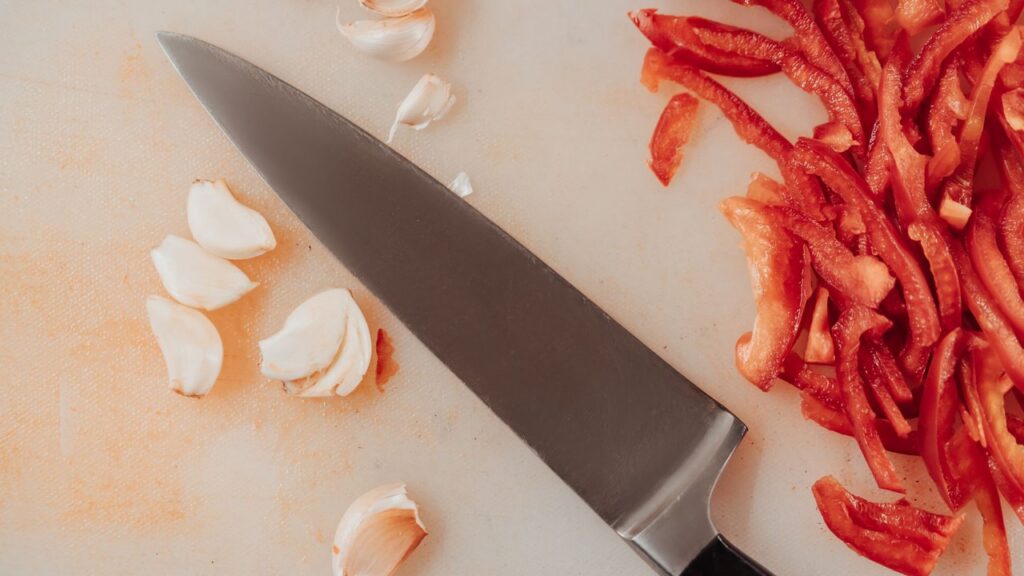
Have you ever wondered whether a quick rinse is enough to clean a cutting board after making dinner?
The answer is no. Washing removes food and dirt, while sanitizing kills bacteria with chemicals. A reliable routine starts with a thorough wash, followed by careful sanitizing.
Here is how to clean and sanitize your boards, handle bleach safely, prevent cross-contamination, and know when a worn board needs to be replaced.
Clean Before You Sanitize
Cleaning and sanitizing do two different jobs. Cleaning removes dirt and organic matter with soap or detergent. Sanitizing uses chemicals to kill bacteria on a surface. Always clean first so the sanitizing step begins on a visibly clean surface.
The FDA says to wash cutting boards with hot, soapy water after preparing each food item. Do this even after cutting bread or vegetables so the next ingredient starts on a clean surface.
- Remove stuck-on food. Scrape away any pieces left on the board before washing.
- Wash thoroughly. Use hot, soapy water, and scrub the entire cutting surface until all visible residue is gone.
- Check before using the dishwasher. Use the dishwasher only if the board is dishwasher-safe. Follow its care directions instead of assuming it can withstand the heat.
Mix the Sanitizing Solution Correctly
Once the board is thoroughly washed, use the USDA’s cutting-board sanitizer: 1 tablespoon of unscented, liquid chlorine bleach in 1 gallon of water. Measure both ingredients rather than adding an extra splash of bleach.
Spread the solution over the cutting surface, and let it stand for several minutes. Rinse the board with clear water, then air-dry it or pat it dry with clean paper towels.
Sanitizing comes after washing and never replaces it.
- Choose plain bleach. Use the unscented liquid chlorine bleach specified by the USDA, and follow the directions on its label.
- Measure the water. Begin with the full gallon so the bleach is not more concentrated than the USDA recipe.
- Allow contact time. Keep the solution on the board for several minutes before rinsing it away.
- Dry the board cleanly. Air-dry it or use clean paper towels, not a kitchen towel that may have touched raw food.
Handle Bleach Without Creating a Hazard
Put on gloves to protect your skin, and work where fresh air can circulate. Keep the bleach and diluted solution out of reach of children and pets.
Never mix bleach with vinegar, ammonia, another cleaner, or another disinfectant. The CDC warns that combining bleach with other cleaning products can release vapors that are dangerous to breathe.
Vinegar is not a substitute for this sanitizer. University of Minnesota Extension says vinegar does not adequately sanitize surfaces.
- Read the bleach label. Follow all handling and protective-equipment instructions.
- Ventilate the room. Open a window or provide another source of fresh airflow while working with bleach.
- Keep products separate. For this recipe, add only the measured water to the bleach.
Keep Raw Foods on a Separate Board
The USDA recommends using one cutting board for fresh produce and another for raw meat, poultry, and seafood. This division helps keep a board exposed to raw animal foods from being reused for bread, fruit, or other food that may not be cooked.
Both boards still need to be washed after use. If you own only one, stop and wash it thoroughly with hot, soapy water before moving from raw meat, poultry, or seafood to ready-to-eat food.
- Dedicate the boards. Reserve one for raw meat, poultry, and seafood and another for produce and other ready-to-eat foods.
- Make them easy to tell apart. Choose boards that look noticeably different so you are less likely to swap them during a busy meal.
- Wash after every use. A dedicated board helps separate foods, but it does not replace cleaning.
Choose Wood or Plastic With Cleaning in Mind
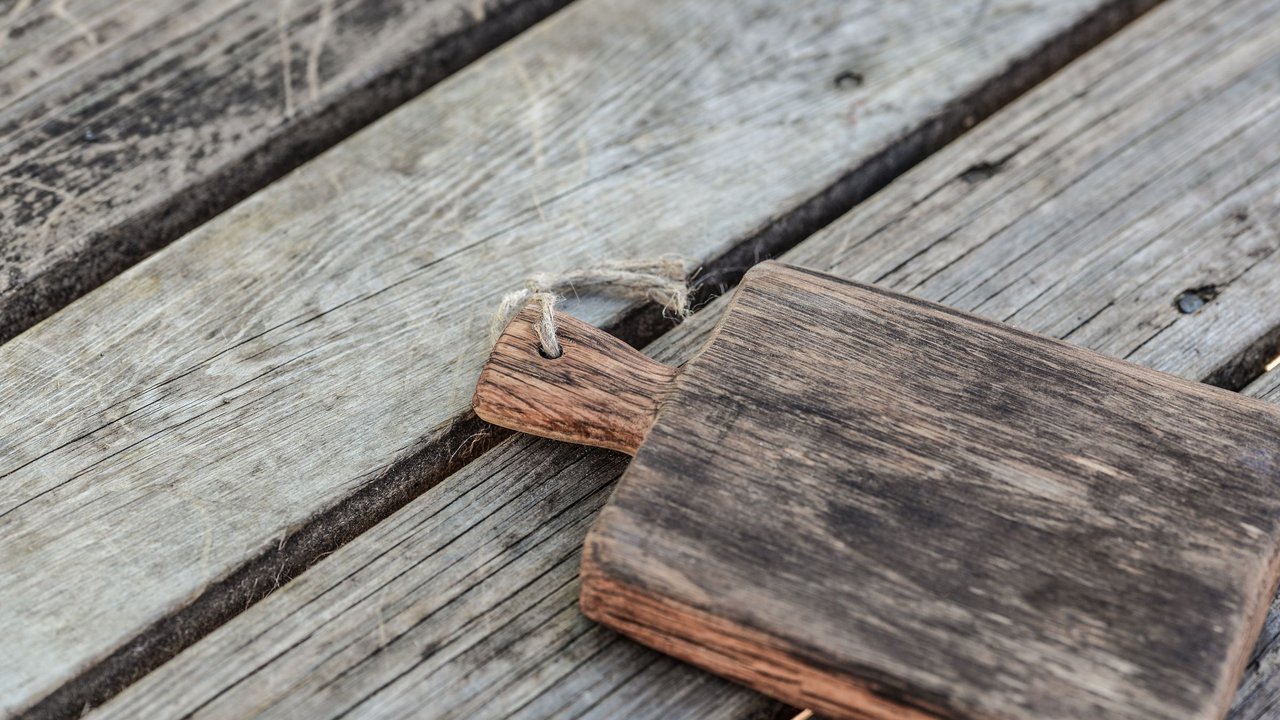
Wood is not automatically off-limits, although the USDA considers it porous. Nonporous materials such as plastic are easier to clean, making them a practical choice for food preparation.
The material alone does not make a cutting board safe. Wash both wood and plastic boards with hot, soapy water after use. Put either kind in the dishwasher only when it is marked dishwasher-safe.
- For plastic boards. Use the dishwasher when the board’s care directions say it is safe to do so.
- For wood boards. Follow the care directions, and do not assume every wooden or laminated board belongs in a dishwasher.
- For either material. Inspect the cutting surface regularly instead of judging its condition by the material alone.
Replace a Board That Cannot Be Cleaned
Some knife marks are normal. Excessive wear and hard-to-clean grooves or cracks are not. The FDA says bacteria can grow in those damaged areas.
Replace the board when scrubbing can no longer reach the damage or the surface becomes deeply grooved. This applies to plastic, nonporous acrylic, and wooden boards.
- Look for deep grooves. Cuts that trap residue and resist cleaning mean it is time for a replacement.
- Check for cracks. Discard the board when cracks create spaces that cannot be washed thoroughly.
- Apply the rule to every material. Do not keep a badly worn board simply because it is wood or dishwasher-safe plastic.
A thorough wash, careful sanitizing, and regular inspection will keep your cutting boards ready for the next meal.
Sources:
- U.S. EPA: What’s the Difference Between Products That Disinfect, Sanitize, and Clean Surfaces?
- FDA: Safe Food Handling
- University of Minnesota Extension: Cooking Food Safely at Home
- USDA FSIS: How Do You Sanitize Surfaces?
- CDC: Outbreak of Invasive Listeriosis Associated With the Consumption of Hog Head Cheese
- CDC: Cleaning and Disinfecting With Bleach
- Poison Control: Chlorine Gas—What Happens if You Mix Bleach and Other Cleaners
- CDC: When and How to Clean and Disinfect Your Home
- University of Minnesota Extension: Cleaning and Sanitizing Tools, Harvest Containers and Surfaces
- USDA FSIS: How Can I Prevent Cross-Contamination When Using Cutting Boards?
- USDA FSIS: Should I Use a Wooden Cutting Board or a Plastic One?
- FDA: Cleaning—Food Safety for Moms-to-Be