

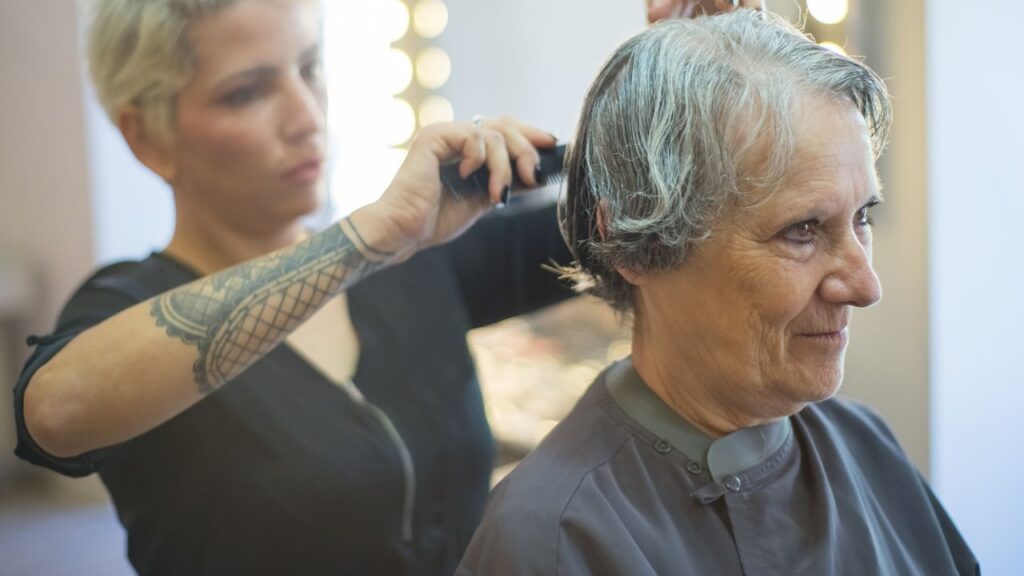
Why does a woman’s hair often look thinner after 60, even when her hair-care routine has not changed?
Normal aging is often part of the answer. Menopause and inherited female-pattern hair loss can also make hair finer. An underactive thyroid and iron-deficiency anemia can include hair changes, while some medicines can cause hair loss.
Pay attention to where the thinning appears and whether it came on quickly. Here is what commonly causes thinning hair after 60 and when it is worth seeing a doctor or dermatologist.
What Changes With Age?
Hair naturally changes as the years pass. MedlinePlus puts it simply: “Nearly everyone has some hair loss with aging.”
The change is not simply a matter of more strands falling out. According to MedlinePlus, many aging follicles eventually stop making new hairs, so every lost strand may not be replaced. Over time, the hair can look less full than it once did.
Sudden loss or thinning that quickly becomes noticeable deserves medical attention. A health condition or medicine may be involved.

How Does Menopause Affect Hair?
Changing hormone levels during menopause can shrink hair follicles, according to Cleveland Clinic. Smaller follicles produce finer hair.
Those thinner strands can make more of the scalp visible and leave the hair looking less full, even without bare patches.
Age alone does not identify the cause of thinning. The location of the hair loss and how quickly it developed can help a clinician assess the possibilities.
Could It Be Female-Pattern Hair Loss?
Female-pattern baldness is “the most common type of hair loss in women,” according to MedlinePlus. The American Academy of Dermatology says it commonly begins during a woman’s 40s, 50s, or 60s, although it can start earlier.
Family history can be part of the picture. Think about whether a parent, grandparent, or other close relative experienced similar thinning.
A common pattern is thinning across the top of the head with a widening middle part. Unlike the usual male pattern, the front hairline typically does not recede.
The American Academy of Dermatology describes female-pattern hair loss as progressive, meaning it tends to continue. Its guidance also says treatment works best when it begins at the first sign of loss. An early evaluation can be useful, even when the thinning still seems mild.
Can Health Conditions or Medicines Be Involved?
Sometimes hair changes accompany a health condition. MedlinePlus lists dry, thinning hair as a possible symptom of an underactive thyroid. Other possible signs include fatigue, weight gain, sensitivity to cold, constipation, and dry skin.
Iron-deficiency anemia is another possibility. According to the NHS, hair loss may become noticeable as more hair comes out during brushing or washing.
Medicines can also cause hair loss as a side effect. Mayo Clinic lists drugs used for cancer, arthritis, depression, heart problems, gout, and high blood pressure among the possible examples.
Bring a complete list of your prescriptions, over-the-counter medicines, and supplements to an appointment. Do not change a medication by yourself. The FDA advises, “Don’t stop taking the medicine on your own,” because a doctor should help you weigh the benefits and risks.
When Should You See a Doctor?
Make an appointment with a primary care doctor or dermatologist if the change is new, unexplained, or troubling. Arrange an evaluation sooner if you notice any of these signs:
- Sudden or rapid. Get checked if hair starts falling out quickly instead of thinning gradually.
- Unusual pattern. Ask about isolated patches or loss that looks different from thinning across the top of the head.
- Pain or itching. Scalp discomfort that appears with hair loss should be examined.
The American Academy of Dermatology says effective treatment begins with “finding the cause.” A board-certified dermatologist can examine the pattern and work toward an accurate diagnosis.
A blood test may uncover a medical condition that is causing hair loss. If an underlying disease is responsible, treatment should address that condition. If a medicine may be contributing, discuss the next step with the clinician managing your care.
Before the appointment, note when the change began, how quickly it progressed, and whether you recently experienced any health or medication changes. These details can help your clinician assess the problem.
Hair thinning after 60 is common, but you do not have to guess at the reason. The pattern and pace can help a clinician discuss sensible next steps. This article provides general health information and is not a substitute for personal medical advice. Have you noticed a gradual or sudden change in your own hair?
This article is for general information and isn’t a substitute for advice from your doctor.
Follow Lilyon on MSN for more stories like this.
Sources: