

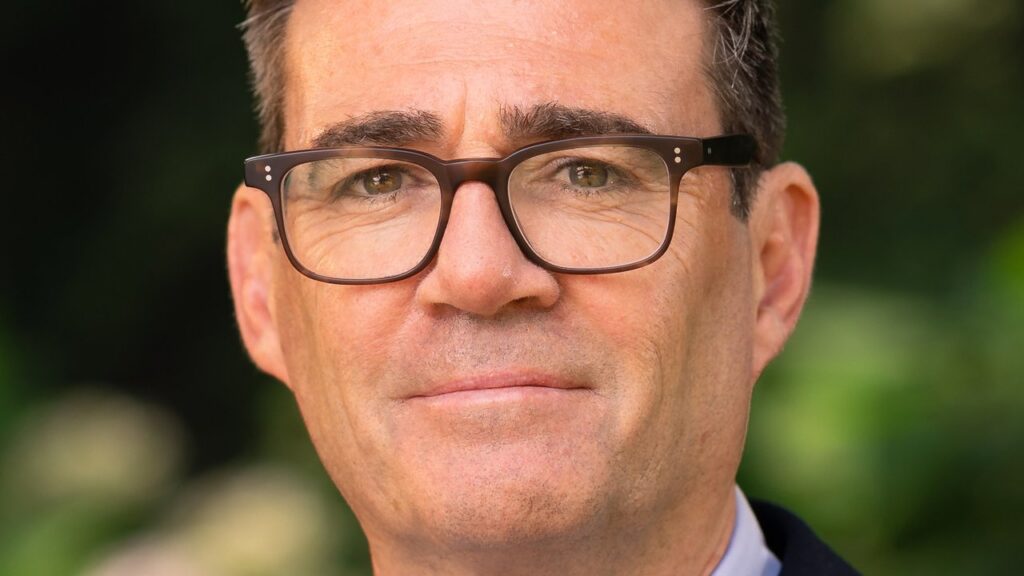

British Prime Minister Andy Burnham said on Nov. 16, 2026, that Brexit was the first step in a broader turn toward isolationism. He called that trend “exactly what our enemies wanted” and said Russia wanted division within NATO and a weaker Europe.
The remarks came before a Nov. 20 summit in Brussels where British and European Union leaders plan to discuss closer cooperation. The outcome could shape the UK’s economy, security, and long-term relationship with Europe.
Here’s what we know.
What Did Burnham Say?
Burnham made the comments during a foreign policy speech at the Lord Mayor’s Banquet in London. The official transcript records him saying: “Looking back, Brexit was the first domino to fall in a global move towards more isolationism and protectionism.”
He argued that Britain’s international standing had declined during the decade since the referendum. “And to be frank, we have lost more than we have gained in the last 10 years,” he said, describing the country’s current Brexit arrangement as inadequate.
Sky News shared a clip from the speech:
"We have lost more than we have gained in the last 10 years."
— Sky News (@SkyNews) November 16, 2026
Andy Burnham, speaking at the Lord Mayor's banquet, says that "the hard Brexit we were given is not good enough for Britain."https://t.co/sclbJZTYr8
📺 Sky 501, Virgin 602, Freeview 233 and YouTube pic.twitter.com/aDqZhut3LZ
Burnham’s announced next step was a discussion with the EU about the countries’ long-term relationship after the Brussels summit. He said the options would take time to develop and would inform decisions in the next Parliament.

Why Did He Mention Enemies?
Burnham singled out Russia, arguing that it wanted NATO divided and Europe less able to resist its plans for Ukraine. This was a political and geopolitical judgment presented as part of his case for stronger alliances.
He also connected international events with household pressures at home, saying decisions in Moscow can affect communities such as his Makerfield constituency. His broader message was that Britain can exert more influence when working closely with allies.
What Is the Brexit Background?
The UK held its EU referendum on June 23, 2016. The Electoral Commission recorded 51.9% of votes for leaving and 48.1% for remaining.
The country formally left the EU on Jan. 31, 2020. The transition period ended on Dec. 31, 2020, when the UK also left the EU single market and customs union.
Britain’s Office for Budget Responsibility assumes the post-Brexit trading relationship will reduce long-term productivity by 4% compared with remaining in the EU. That is a forecast assumption rather than a direct measurement of every economic effect since Brexit.

What Happens at the Brussels Summit?
European Council President António Costa and European Commission President Ursula von der Leyen are scheduled to welcome Burnham to Brussels on Nov. 20 for the second EU-UK summit. The EU says the agenda includes security, energy, agricultural and food rules, climate, migration, law enforcement, and contacts between people.
Burnham said a potential agreement could add as much as 0.4% to British gross domestic product. He said any agreement must satisfy three tests:
- Labour Commitments It must remain consistent with the governing party’s election manifesto and current limits on closer EU ties.
- The Brexit Arrangement It must improve the existing agreement and bring it closer to what Burnham said voters expected in 2016.
- Everyday Benefits It must produce practical improvements for communities, including lower costs and fewer barriers for businesses.
Burnham said the government would not cross its existing EU policy limits before a general election. Longer-term options would be presented for decisions in the next Parliament, with the British public determining the eventual outcome.
The next formal milestone is the Nov. 20 summit, after which EU and UK leaders are expected to issue a joint declaration.
Sources:
- UK Government: PM speech at the Lord Mayor’s Banquet, 16 November 2026
- AP: UK leader Andy Burnham says Brexit hasn’t worked ahead of a reset summit with the EU
- The Guardian: Burnham says Brexit has dramatically diminished Britain’s global standing
- Electoral Commission: Report on the June 2016 EU referendum
- UK Parliament: Brexit timeline
- Office for Budget Responsibility: Brexit analysis
- European Council: EU-UK summit to take place in Brussels on 20 November